
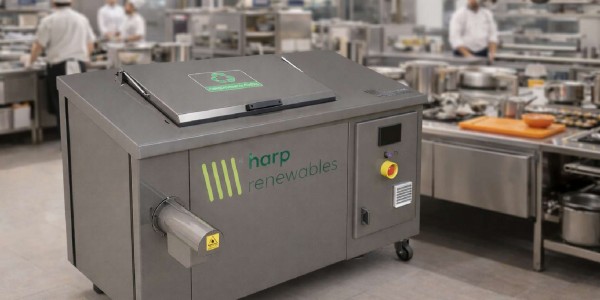
On-site food waste composting for hotels with a Harp composter biodigester
Food waste management is one of the most demanding and expensive parts of day to day hotel operations. Kitchen prep waste, buffet leftovers, and plate scrapings are generated continuously, create odors, affect back of house hygiene, and drive collection and hauling costs. At the same time, sustainability expectations are rising through ESG requirements, brand standards, and guest preferences, pushing hotels to adopt solutions that are credible and measurable.
On-site composting with a Harp composter biodigester provides a practical way to manage organic waste within the hotel premises. With the right workflow and operating routine, a hotel can gain control over volumes, improve hygiene, reduce odor exposure, and demonstrate real environmental performance.
What on-site composting means in a hotel environment
On-site composting means treating organic waste at the point where it is produced, instead of relying solely on external collectors and frequent pickups. The process becomes part of kitchen and stewarding routines, supported by clear separation rules, daily feeding, and consistent operational checks.
Operationally, this approach reduces the need for temporary storage, minimizes handling time, and stabilizes costs, especially during peak season when quantities rise sharply.
Why organics are the hardest waste stream in hospitality
Organic waste is a priority for hotels for three main reasons.
First, it is produced every day and often in large volumes, particularly in all inclusive properties and hotels with multiple outlets.
Second, it creates odors and attracts pests, directly affecting hygiene and the overall back of house environment.
Third, it is heavy and wet, which increases collection, transport, and storage burdens compared to other streams.
For these reasons, improving organics management is not only an environmental choice. It is a direct operational improvement.
Key benefits of composting with Harp for hotels
1. Lower costs and better predictability
By processing organics on site, hotels can reduce the frequency and volume of organic waste pickups and limit the need for holding waste in storage areas. For many properties, this results in more predictable operating costs and less exposure to price increases for hauling and disposal.
It also helps streamline internal logistics by reducing trolley movements, handling time, and the number of odor sensitive collection points.
2. Improved hygiene and reduced odors in back of house
Directing organic waste into a closed processing system reduces the time food waste sits in bins and holding areas. In practical terms, this means fewer odors, a cleaner waste handling zone, improved working conditions for staff, and a lower risk of pest attraction.
3. Measurable progress in sustainability and ESG
Hotels increasingly need evidence, not general claims. On-site organics processing supports tracking of waste quantities and performance, enabling reporting that is clear and credible. This strengthens the hotel’s sustainability narrative and supports ESG goals with measurable outcomes.
4. Stronger compliance through better source separation
When a hotel invests in on-site processing, correct separation at source becomes operationally meaningful. Staff training becomes more structured, workflows are standardized, and contamination decreases. In many cases, the same discipline also improves performance in other streams such as packaging recyclables.
5. A useful output and a link to landscaping
Under the right framework, the resulting material can be used as a soil improver in collaboration with the landscaping team or an external contractor. This can add value for resort properties with extensive gardens and soil improvement needs.
A clear technical approach is important here, ensuring appropriate handling, quality expectations, and suitability based on the specific inputs and operating model.
Why Harp in practice
Technology only matters if it fits hotel reality without adding complexity. Harp composting systems are designed for continuous operation with daily feeding, aligning well with environments where volumes change with occupancy and seasonality.
From a hotel standpoint, success depends on four factors.
- A clear daily feeding routine
- Minimal manual transfers
- A clean and odor stable installation area
- Proper commissioning and technical support
When these are in place, the system functions as infrastructure, not as an additional burden for the F and B team.
How the solution integrates into daily hotel operations
Performance is not only about equipment, but also about workflow integration. A typical implementation includes the following steps.
- Source separation in kitchens and prep areas
- Collection using closed containers or dedicated trolleys with hygiene controls
- Daily feeding in defined time windows
- Simple routine checks and basic maintenance tasks
- Quantity tracking to document results and support reporting
This approach avoids a makeshift setup and delivers a consistent, controlled, and audit friendly operation.
Which hotels benefit most
On-site composting with Harp is particularly suitable for:
- Resorts with all inclusive operations and high buffet volumes
- Hotels with multiple outlets, events, and high organics generation
- Island and remote properties where pickups are costly or inconsistent
- Hotels pursuing sustainability certifications or ESG reporting with measurable actions
- Properties aiming to improve hygiene standards and reduce odors in back of house
What to assess before installation
Before selecting an on-site composting solution, a short operational and technical assessment is recommended.
- Seasonal estimate of daily organic waste volumes
- Available space and access for feeding and servicing
- Workflow mapping from kitchens to the installation area
- Basic utility requirements and safe integration into back of house
- Staff training plan for separation and daily routine
Proper preparation reduces start up errors and helps the system deliver results from the first operating period.
Conclusion
Composting with a Harp composter biodigester is a complete on-site approach for hotels that want meaningful control over their most challenging waste stream. It can reduce operational burdens, improve hygiene, limit odors, deliver measurable sustainability performance, and strengthen the hotel’s environmental profile with real outcomes.
A successful proposal depends on correct sizing, model selection, and workflow design. EcoVRS can support the assessment, equipment selection, and operational integration so the transition is structured, reliable, and aligned with hotel operations.
Latest Posts
-
Innovation Award for Solar Street Bin

Solar street bin is announced the winner for Innovation Award 2019.
-
EcoVRS in FODSA in Kalamata

Annual Waste Management Meet-up.
-
Waste Drying technology at London Heathrow Airport

Food-waste drying in London airport.