
Practical guide to reducing the cost, odors, and volume of food waste
Bio-waste (food waste) is the “heaviest” and most demanding waste stream in a hotel: it is produced daily, generates odors, requires a clean handling routine, and directly affects operating costs. On-site management (within the hotel) provides control, measurable results, and better hygiene in the back-of-house.
In practice, the two solutions that work best in a hotel environment are:
-
On-site composting (in-vessel / mechanical composting)
-
On-site drying (food waste drying)
Let’s see what each one means, where it fits best, and how it can be implemented without disrupting the kitchen’s daily operations.
What a hotel’s “food waste” includes
It almost always comes from:
-
Kitchen / preparation (peelings, trimmings, production leftovers)
-
Buffet (unsold/unserved food)
-
Plate returns (plate waste)
-
Where applicable: greens/prunings (handled differently, case by case)
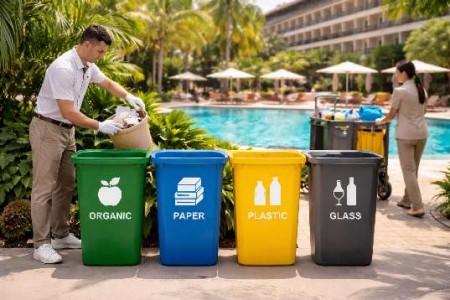
Critical point: success starts with source separation. The fewer “foreign” materials (plastics/packaging/metals), the better the performance—whether composting or drying.
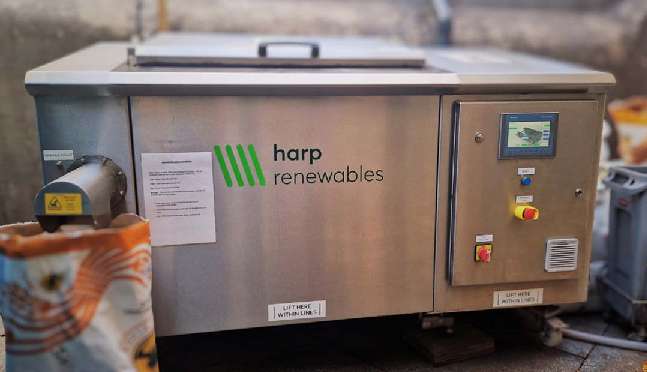
Solution 1: On-site composting (in-vessel / mechanical composting)
Operating principle
In-vessel composting is a controlled aerobic biological process inside a closed chamber/unit, with monitoring and adjustment of critical parameters (aeration, mixing, moisture, temperature, retention time). Under the right conditions, the organic fraction (food waste) is converted into a stabilized material (compost or pre-compost/stabilized organic output), depending on the technology and operating protocol.
Typical subsystems/stages
-
Pre-treatment (where applicable): size reduction/homogenization of inputs
-
Mixing and aeration: mechanical mixing and/or forced aeration to maintain aerobic conditions
-
Controlled biodegradation: temperature profile and moisture kept within operational limits
Suitability for hotels
On-site composting is particularly suitable when:
-
There is a strategic goal for circular on-site management, reducing transport and waste flows.
-
There is suitable space (back-of-house/technical area) with access for safe feeding and servicing.
-
A clear operational responsibility can be assigned (shift supervisor/feeding procedure/basic checks).
-
A realistic plan exists for the produced material (internal use for landscaping where practical, or organized removal as stabilized output).
Critical technical success factors
-
Input quality control (contamination control): plastics, glass, or metals reduce performance and increase operational burden (cleaning, wear, degraded output quality).
-
Correct mix formation: where required, use of bulking/structural material or additives to improve porosity, aeration, and moisture adjustment.
-
Stable operating routine: daily/regular feeding and basic checks to avoid peaks that affect odors and process stability.
Solution 2: On-site drying of bio-waste (food waste dryer)
Operating principle
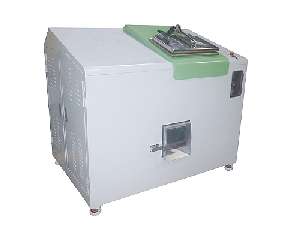
On-site drying is a thermomechanical process that reduces the moisture content of bio-waste through controlled heating, air circulation/recirculation, and mixing. The output is a drier, more stable, and significantly lighter residue, with reduced fermentation potential and therefore a reduced odor footprint during temporary storage and handling.
Typical subsystems/stages
-
Drying chamber with mixing/agitation mechanism
-
Ventilation/exhaust system to manage water vapor and stabilize the process
-
Odor management system (filters and, where required, a biofilter/specialized air treatment)
-
Cycle programming (time, thermal profile, daily routine)
Suitability for hotels
On-site drying is particularly suitable when:
-
The goal is maximum reduction of weight/volume and optimization of temporary storage/internal movement.
-
There are space constraints, or a lower process complexity is preferred compared to composting.
-
Predictability (cycles, repeatability) is required and variability from feedstock composition/moisture must be minimized as much as feasible.
Critical technical success factors
-
Energy efficiency and correct sizing: select capacity and cycles based on real kg/day and seasonality to avoid under/oversizing and inefficient operation.
-
Final residue management: a clear operational plan for removal/disposal of the dried material and its storage requirements.
Latest Posts
-
How earthworms reproduce
How do earthworms reproduce?
-
Innovation Award for Solar Street Bin

Solar street bin is announced the winner for Innovation Award 2019.
-
Our food waste management systems were installed in Central Hotel of Athens
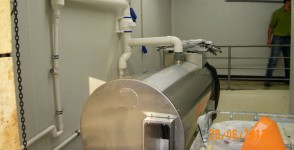
Installation of Dehydra bench and Rocket composter in central hotel of Athens