Organic Waste Management in Municipalities
Challenges, legislation and practical solutions
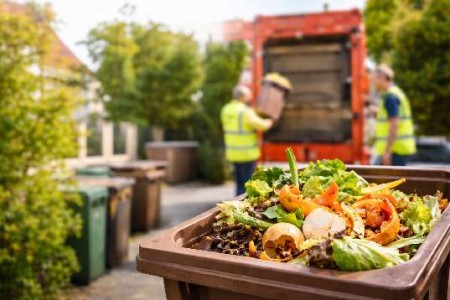
Organic waste management has become one of the most pressing issues for municipalities. It is no longer just an environmental matter. It is a daily operational challenge that affects collection costs, hygiene conditions, transport logistics and the overall performance of local waste services.
In practice, organic waste is one of the most demanding waste streams to manage. It is wet, heavy and highly biodegradable, which means it quickly creates odours and sanitation problems if it is not handled properly. Greek guidance for municipalities notes that bio-waste accounts for a very large share of municipal waste, making it a key priority for any local authority that wants to reduce landfill dependency and improve waste performance.
Why organic waste is such a challenge for municipalities
Municipalities usually deal with organic waste from households, street markets, municipal kitchens, schools, public facilities, restaurants and green maintenance activities. These materials are generated every day, often in high volumes, and require frequent collection.
The first major problem is odour and hygiene. When organic waste remains in bins or storage areas for too long, unpleasant smells intensify and the risk of insects, vermin and microbial activity increases. This creates pressure both on municipal crews and on residents living nearby.
The second problem is weight and moisture. Organic waste contains a very high percentage of water, which means municipalities often spend money transporting unnecessary weight. This directly increases collection and transfer costs, especially in areas where waste must travel long distances.
The third problem is contamination. If food and organic waste are mixed with plastics, packaging or other unsuitable materials, the stream becomes much harder to recover or process properly. Source separation is therefore not just a regulatory requirement; it is essential for making any treatment system work efficiently.
These pressures become even stronger in island municipalities, tourist destinations and remote areas, where seasonal peaks can dramatically increase daily organic waste generation.
What the current legislation requires
The legal direction in both the European Union and Greece is clear: bio-waste should not continue to be treated as mixed municipal waste.
At EU level, the Waste Framework Directive, as amended by Directive (EU) 2018/851, requires Member States to ensure that bio-waste is either separated and recycled at source or collected separately. The updated framework also supports the broader transition to prevention, reuse, recycling and landfill reduction.
In Greece, this direction is reflected in Law 4819/2021, which strengthens separate collection obligations and aligns national waste management policy with circular economy principles. For municipalities, this means increasing pressure to divert organic waste away from mixed disposal and toward more effective collection and treatment systems.
At the same time, the landfill fee is becoming a serious economic driver. According to the European Environment Agency, Greece is applying a staged landfill tax that rises to EUR 55 per tonne by 2027, specifically to discourage landfilling and support prevention, separate collection and recycling measures.
In simple terms, municipalities that continue sending large quantities of organic waste to landfill will face growing operational and financial pressure.
What municipalities really need
Most municipalities do not simply need another bin. They need practical systems that work under real operating conditions.
A useful solution must reduce waste volume and weight, limit odours, improve hygiene, lower transport costs and help local authorities gain better control over the organic stream. Ideally, it should also support a more decentralised approach, so that municipalities can treat part of the problem closer to the point where waste is generated.
This is exactly where solutions such as the GAIA food waste dryer and the HARP composter/biodigester can add value.
GAIA: a practical drying solution for difficult organic waste streams
The GAIA food waste dryer is a strong option for municipalities dealing with wet, heavy and odour-intensive organic waste. According to EcoVRS product information, GAIA systems dry food and other organic waste through heat and mechanical mixing, producing a sterilised, stabilised and odour-free output that can be stored for weeks without degrading. EcoVRS also states that the output can be reduced in volume and mass by up to 90%, depending on the model and waste type.
This makes GAIA particularly useful for municipalities that manage food waste from markets, public kitchens, social care structures, schools or seasonal tourist zones. Reducing moisture means reducing transport weight. Reducing odours means improving hygiene and making collection points easier to manage. Some GAIA models are also promoted by EcoVRS as suitable for handling difficult or packaged food waste streams, which can be important in real municipal conditions.
In short, GAIA helps municipalities tackle the problem at source before it turns into a larger transport and disposal burden.
HARP: on-site processing with circular economy value
The HARP composter/biodigester is better suited to cases where a municipality has a cleaner, source-separated organic stream and wants a more circular treatment approach.
According to EcoVRS, the HARP range can process from 1,000 to 50,000 litres, or up to 5.5 tonnes of food waste per week, while reducing volume by an average of 70%. EcoVRS also states that within around 24 hours, the system produces a nutrient-rich output that can be used as a soil enhancer, biomass fuel or feedstock for anaerobic digestion.
For municipalities, this means HARP can support a more advanced local treatment strategy, especially where there is better control over input quality. It can be an attractive option for organised municipal facilities, pilot source-separation schemes or local authority projects that want to demonstrate measurable circular economy results.
Rather than simply moving waste elsewhere, HARP supports local processing and a more useful end product.
Which solution is the right one?
There is no single answer for every municipality.
If the main problem is moisture, odour, transport cost and difficult food waste streams, GAIA may be the most practical choice.
If the municipality already has a cleaner organic stream and wants to move toward a more circular treatment model with local processing benefits, HARP may be the better fit.
In many cases, the best strategy is not choosing one over the other, but combining technologies depending on the source, quantity and quality of the organic waste produced.
The real goal for local authorities
Today, proper organic waste management is not a luxury for municipalities. It is a matter of compliance, cost control and operational efficiency.
Municipalities are under increasing pressure to reduce mixed waste, divert bio-waste from landfill and align with both national and European targets. The earlier they adopt practical and realistic treatment solutions, the easier it becomes to reduce disposal costs, improve day-to-day service performance and build a more sustainable local waste system.
At EcoVRS, we believe municipalities need solutions that work in the real world, not only on paper. Technologies such as GAIA and HARP can help local authorities take meaningful steps toward smarter, cleaner and more efficient organic waste management.
Latest Posts
-
Presentation in Building Green Expo about composting in urban ecosystems
Presentation of the beneficial effects of the management of organic waste in urban ecosystems. Developed all the composting techniques, from [...]
-
Monitoring of Compost Bin Program in Nea Smyrni
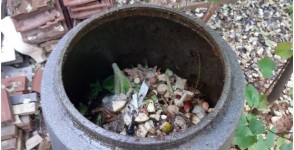
Home Composting program with monthly monitoring meetings is running successfully in Nea Smyrni.
-
Green corners in Macedonia
This funding program refers to Macedonia for creating Green Corners for Waste Management.